Friday, May 30, 2014

SK40C Construction


Figure: Top view of board
v  After burn my program, we put in the PIC  at the SK40C board and solder for other component such as in figure above.
Figure: Bottom view of board
v  We used the Port C (RC1/T1OSI/CCP2) Pin 16 for the BUZZER,  Port B (RB0/INT) Pin 33 for the SWITCH SENSOR and lastly, also Port B (RB1) Pin 34 for the VIBRATE SENSOR. All of the Ground we combine it at the VSS Pin 12 and 31.

Tuesday, May 27, 2014

PICkit 2 PIC Programmer


The UIC00B PIC Programmer is design to program PIC microcontroller which includes most of the PIC family. In this project, the PIC Programmer is used to program the programming written using MikroC PRO for PIC inside the PIC16F877A as shown in Figure 1. This PIC Programmer comes together with the PICkit 2 Programmer, which will enable it to program the programming inside the PIC16F877A through this software as shown in Figure 2.

               This also allow user to quickly program and debug the source code while the target PIC is on the development board. Since USB port is commonly available and widely used on Laptop and Desktop PC, UIC00B is designed to be plug and play with USB connection. This programmer obtained its power directly from USB connection, thus NO external power supply is required, making it a truly portable programmer. This programmer is ideal for field and general usage. UIC00B offers reliable, high speed programming and free windows interface software.
Figure 1: USB ICSP PIC Programmer UIC00B

Figure 2: PICkit 2 Programmer Software

Saturday, May 24, 2014

MPLAB SIMULATION

MPLAB Integrated Development Environment (IDE) is a comprehensive editor, project manager and design desktop for application development of embedded designs using Microchip PICmicro and dsPIC microcontrollers. IT is product of Microchip Inc. and is an effort to make source code development as smooth and comprehensive as possible. It is called an Integrated Development Environment, or IDE, because it provides a single integrated “environment” to develop code for embedded microcontrollers.

            In the development of programming aspect, the MPLab are used to write down all the source code and coding for smart car instruction. Figure 1 shows how the MPLab software would appear on the desktop. All the source codes are written down into this software are would be built.
Figure 1: MPLab Software Editor

In addition, the source code will be built and the output of the successfully source code will appear through the window as shown in Figure 2. The successful output will create hex file (.hex) that needed to burn the programmer or instruction into pic microcontroller.

Figure 2: Output of Source Code

Monday, May 19, 2014

Female & male SUB – D 9 Serial Pin Connector

The DE-9 D-sub 9-pin connector is often mistakenly referred to as the "DB-9" connector.  The "E" refers to the shell size.  A "DB-25" connector has a "B" size shell, but the common nine-pin connector is smaller and has an "E" size shell.
            
This  connector (regardless what you call it) is used for a variety of purposes.  Two common applications are RS-232/EIA-232 (serial) connections (including UPS cables), and a variety of video interfaces on the IBM PC.  


Here's a good set of figures for D-sub 9 male and female connectors, as viewed from the pin side (not the solder side):

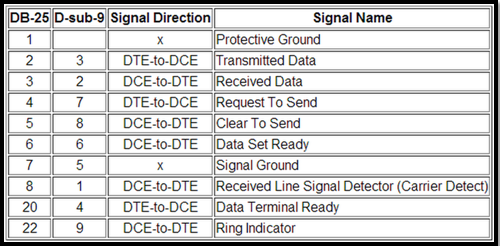
Refer at the Table 1, this is table of pins commanly used for RS-232 (Serial):
Table 1: RS-232 Serial Connection


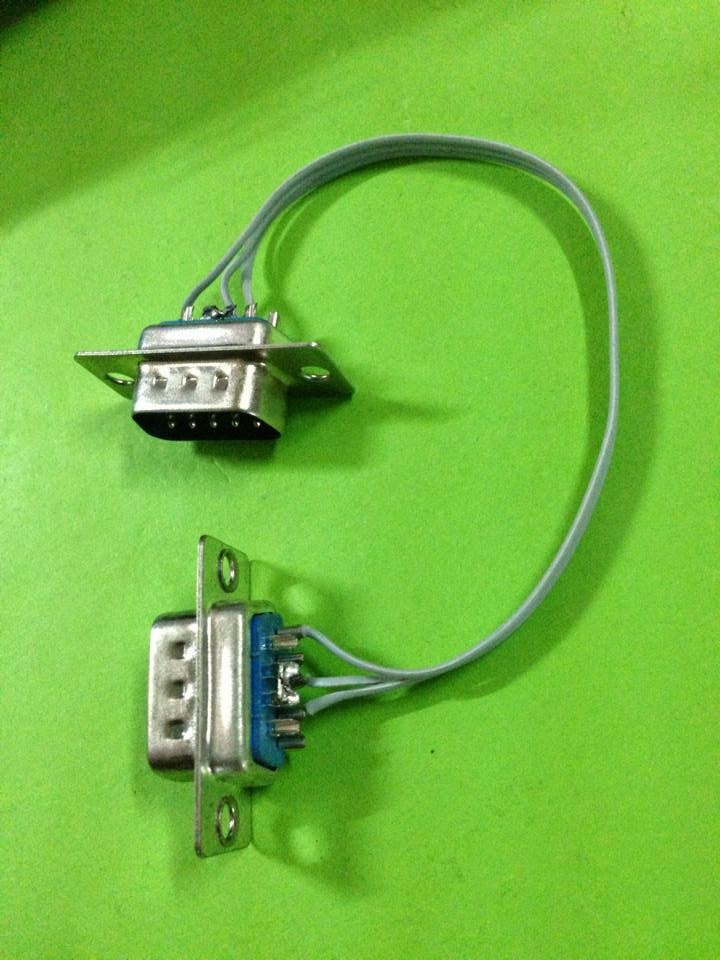
Figure: Male SUB – D 9 pin connector and Serial cable.


Thursday, May 15, 2014

USB Burner

UIC00B offers low cost yet reliable and user friendly PIC USB programmer solutions for developer, hobbyist as well as students. It is designed to program popular Flash PIC MCU which includes most of the PIC family. Besides 8bit, it can also program 16bit and 32bit PIC MCU. On board ICSPTM (In Circuit Serial Programming) connector offers flexible methods to load program, UART Tool and Logic Tool. It supports on board programming which eliminate the frustration of plug-in and plug-out of PIC MCU. This also allows user to quickly program and debug the source code while the target PIC is on the development board. Since USB port is commonly available and widely used on Laptop and Desktop PC, UIC00B is designed to be plug and play with USB connection. This programmer obtained its power directly from USB connection, thus no external power supply is required, making it a truly portable programmer. This programmer is ideal for field and general usage. UIC00B offers reliable, high speed programming and free windows interface software.

Figure: USB Burner for PIC16F877A

Sunday, May 11, 2014

Piezo Buzzer

Piezo buzzer is an electronic device commonly used to produce sound. Light weight, simple construction and low price make it usable in various applications like car/truck reversing indicator, computers, call bells etc. Piezo buzzer is based on the inverse principle of piezo electricity discovered in 1880 by Jacques and Pierre Curie. It is the phenomena of generating electricity when mechanical pressure is applied to certain materials and the vice versa is also true. Such materials are called piezo electric materials. Piezo electric materials are either naturally available or manmade. Piezo ceramic is class of manmade material, which poses piezo electric effect and is widely used to make disc, the heart of piezo buzzer. When subjected to an alternating electric field they stretch or compress, in accordance with the frequency of the signal there by producing sound.


The above image shows a very commonly used piezo buzzer also called piezo transducer operating at DC voltage. Encapsulated in a cylindrical plastic coating, it has a hole on the top face for sound to propagate. A yellow metallic disc which plays an important role in the producing sound can be seen through the hole.

Piezo buzzers are small electronic devices that emit sounds when driven by low voltages and currents. They are also called piezoelectric buzzers. They usually have two electrodes and a diaphragm. The diaphragm is made from a metal plate and piezoelectric material such as a ceramic plate.


Operation
Piezo buzzers operate using the piezoelectric effect. A voltage that is applied to the leads causes the piezoelectric element to shrink or stretch. This makes the diaphragm vibrate as it bends, thereby producing sound waves. Piezo electric elements are made from crystals, such as quartz or Rochelle salts.


Sounds
The sounds emitted may be extremely low or ear-piercing. They may be made loud enough to cause hearing loss. These sounds include noises such as buzzing, chirping, ringing, sirens, and beeps.

Capacitor Electrolytic

Capacitors are components that are used to store an electrical charge and are used in timer circuits. In this project, the capacitor may be used to produce a timer and filter. Sometimes capacitors are used to smooth a current in a circuit as they can prevent false triggering of other components such as relays. When power is supplied to a circuit that includes a capacitor – the capacitor charge up. When power is turned off the capacitor discharges its electrical charge slowly.


A capacitor is a little like a battery. Although they work in completely different ways, capacitors and batteries both store electrical energy. A battery has two terminals. Inside the battery, chemical reactions produce electrons on one terminal and absorb electrons on the other terminal. A capacitor is much simpler than a battery, as it can't produce new electrons - it only stores them. Inside the capacitor, the terminals connect to two metal plates separated by a non-conducting substance, or dielectric. We can easily make a capacitor from two pieces of aluminum foil and a piece of paper. The dielectric can be any non-conductive substance. However, for practical applications, specific materials are used that best suit the capacitor's function. Mica, ceramic, cellulose, porcelain, Mylar, Teflon and even air are some of the non-conductive materials used. The dielectric dictates what kind of capacitor it is and for what it is best suited. Depending on the size and type of dielectric, some capacitors are better for high frequency uses, while some are better for high voltage applications. Capacitors can be manufactured to serve any purpose, from the smallest plastic capacitor in your calculator, to an ultra capacitor that can power a commuter bus. NASA uses glass capacitors to help wake up the space shuttle's circuitry and help deploy space probes. Here are some of the various types of capacitors and how they are used.

•Air - Often used in radio tuning circuits

•Mylar - Most commonly used for timer circuits like clocks, alarms and counters

•Glass- Good for high voltage applications

•Ceramic - Used for high frequency purposes like antennas, X-ray and MRI
Machines


•Super capacitor – Powers electric and hybrid cars6